Cartridge Catechism: What Astro Boy: Omega Factor Still Preaches to 2026 Superhero Games
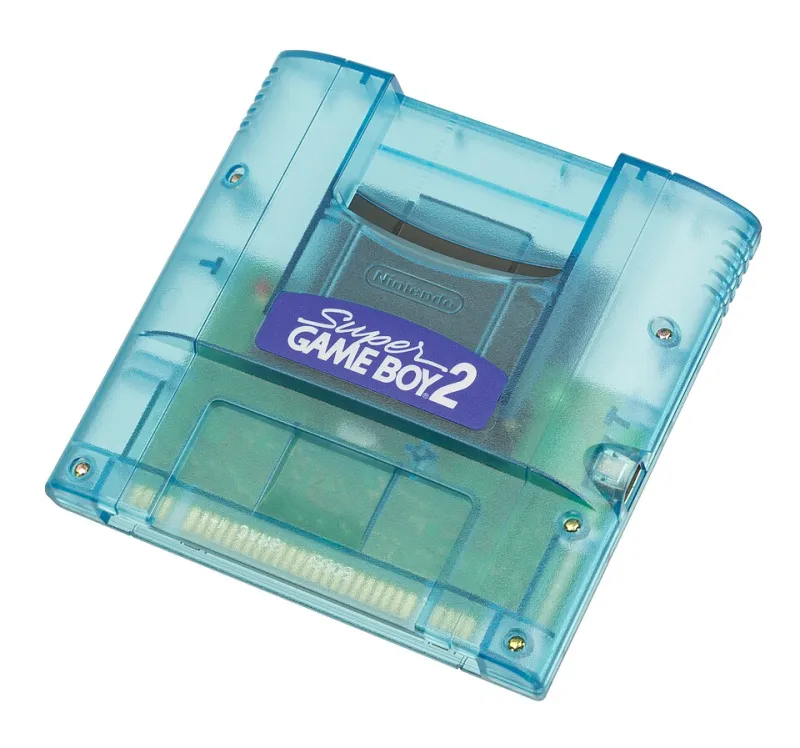
Photo: Evan-Amos, Public domain, via Wikimedia Commons
There is a particular kind of collector regret that comes from ignoring a Game Boy Advance game because the cover art looked like a Saturday-morning cash-in. Astro Boy: Omega Factor was easy to miss in 2004. The GBA shelf was crowded, licensed games had a bad reputation, and a US release of a Tezuka adaptation from Treasure and Hitmaker did not exactly arrive with a marching band. Two decades later, that little cartridge has become one of the most quietly respected action games on the system — and one of the harder Astro Boy collectibles to justify opening.
A Tiny Cartridge With a Big Tezuka Head
Omega Factor is not a straight adaptation of any single Astro Boy story. It is a collage. The game pulls from Osamu Tezuka's Star System — the manga legend's repertory company of characters — and folds Astro's origin, his fights, and his philosophical growing pains into a side-scrolling beat-'em-up with shooter stages and light role-playing upgrades. You punch robots. You fly through corridors. You meet Uran, Dr. Tenma, Dr. O'Shay, and a parade of Tezuka faces that reward readers who know the broader manga universe.
That structure matters. Most licensed games treat source material as wallpaper. Omega Factor treats it as a library. The game assumes Astro Boy is not just a mascot with rocket boots but a character with a history, a creator, and an ethical argument attached to him. For US fans who first met Astro through the 1963 dub or the 2003 series, the cartridge works as both an action game and a crash course in Tezuka's shared universe.
The Punching Is Good. The Point Is Better.
Let us be clear: Omega Factor is fun before it is thoughtful. Treasure's fingerprint is all over the combat — crisp hit feedback, busy screens, bosses that demand pattern reading, and just enough chaos to keep your thumb honest. The upgrade system gives you reasons to replay stages and tune Astro toward your preferred style. It is arcade comfort food with a manga brain.
But the reason the game lingers is its moral core. Astro is not a power fantasy who wins because his numbers are bigger. He is a boy robot built to protect people, and the game keeps circling the cost of that job. The story has stakes that feel personal rather than cosmic. Characters die. Mistakes matter. The script is not afraid to let Astro be naive, then force him to grow. That sounds simple, but modern superhero games often sprint in the opposite direction: bigger maps, louder set pieces, and a hero whose internal life is mostly a skill tree.
Omega Factor's best trick is that it makes empathy feel like a mechanic even when you are mashing buttons. You are not just clearing rooms. You are learning who deserves your trust, when force is the wrong answer, and why Astro's refusal to become a weapon is the whole point. That is a lot to fit into a GBA cart. It is also why the game still feels more like Astro Boy than most glossy adaptations.
What 2026 Superhero Games Could Learn From a 2004 Cartridge
Current superhero games are expensive machines. They want open worlds, live-service roadmaps, cinematic budgets, and combat systems that can be streamed for hundreds of hours. None of that is automatically bad. But there is a trade-off. When every mechanic is designed to keep you in the loop, the story can start to feel like a delivery system for gear upgrades.
Omega Factor has no such luxury. It has to make its point in short stages, tiny sprites, and text boxes. The result is a game that respects your time and, more importantly, respects its hero's ideals. It understands that Astro Boy is not interesting because he can lift a truck. He is interesting because he chooses kindness in a world that keeps testing whether kindness is efficient.
That is the lesson 2026's superhero games keep misplacing. Moral choice does not have to mean a branching dialogue wheel. It can mean a boss fight that asks you to protect someone instead of simply depleting a health bar. It can mean a story that treats mercy as strength rather than a missed combo opportunity. Omega Factor got there on hardware weaker than a modern smartwatch.
The Collector's Math: Why This One Hurts
The collector side is where the handheld secret gets less charming. Astro Boy: Omega Factor did not receive a massive print run in the US, and it has spent years in the shadow of better-known GBA action games. That combination has pushed prices up. Loose cartridges now regularly land in three figures, and complete-in-box copies can climb well past that depending on condition and seller. It is not the most expensive GBA game on the market, but it is no longer a casual flea-market pickup.
That makes authenticity checks important. GBA counterfeits are common, and desirable licensed games are prime targets. Look for clean label printing, correct cartridge mold, and a seller with clear photos of the PCB if possible. Ask about save behavior. Be suspicious of prices that undercut the market by a wide margin. The usual collector rules apply: condition, completeness, and provenance all matter more than a blurry listing photo.
How to Play It Legally in 2026
The safest legal route is still original hardware. A Game Boy Advance, GBA SP, or Nintendo DS with a GBA slot will run the cartridge. A GameCube with the Game Boy Player is another legitimate option if you want the game on a television. Beyond that, check Nintendo's official retro channels before assuming a modern port exists. Official re-releases come and go, and the GBA library on modern Nintendo platforms is worth watching, but Omega Factor is not the kind of title you should count on appearing at a convenient moment.
What you should not do is treat a cheap reproduction cartridge as a harmless shortcut. Beyond the legal issues, bootlegs are a lottery. Some work. Some corrupt saves. Some just feel wrong in the hand. For a game this beloved by the people who know it, that is a sour way to meet Astro.
The Handheld Secret Worth Keeping
Astro Boy: Omega Factor is not a secret because nobody likes it. It is a secret because it arrived in the wrong place at the wrong time: a licensed GBA game in a year when plenty of players had already decided licensed GBA games were not worth their allowance. In 2026, that reputation has flipped. It is now a genuine collector's piece, a legitimate action game, and one of the clearest arguments that Astro Boy belongs in interactive media when the people making the game actually understand him.
The cartridge is small. The prices are not. But the lesson inside it is still bigger than most superhero games manage with a hundred times the budget: being a hero is not about how hard you hit. It is about what you refuse to become.