Rabbit Ears and Robot Heroes: The After-School Block That Built a Fandom
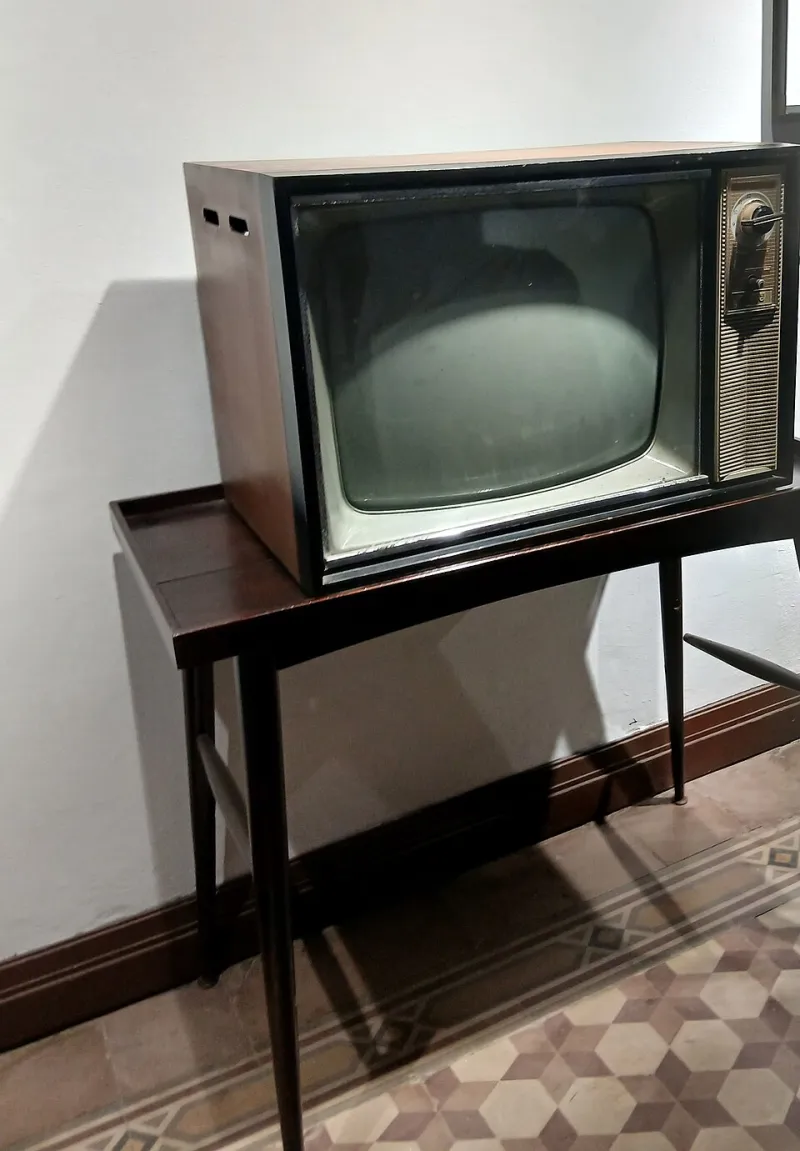
Photo: Naula Ayisabun Aningore, CC BY-SA 4.0, via Wikimedia Commons
The antenna was the first boss fight. You turned the dial, nudged the rabbit ears, and waited for a picture to swim out of the snow. If you were lucky, the reward was a robot boy with jet boots, a giant machine with a rocket pack, and a detective who transformed into a red-suited crime-fighter. Not on demand. Not in a binge queue. Just there, in the same after-school pocket, because a local UHF station had bought a syndication package and needed to fill the afternoon.
That shared slot is the real subject here. Astro Boy, Gigantor, and 8th Man did not arrive in the United States as a unified franchise. They came through separate deals, different dubs, and whatever prints a station could get. But for plenty of kids, they became a unit anyway: the robot block. And that accidental lineup helped turn a niche interest into a broader retro-robot fandom.
The UHF Backlot: Where Syndication Put Robots in a Row
In the 1960s and 1970s, independent UHF stations were the scrappy cousins of the big-network VHF channels. They ran old movies, local wrestling, cartoons, and imported series. After-school programming was a patchwork. A station might run Astro Boy at 4:00, a live-action adventure at 4:30, and Gigantor at 5:00. Another market might flip the order or drop one show entirely. The point was not curation. It was inventory.
But inventory has a way of becoming culture. Because these shows shared the same commercial breaks and the same lead-in, kids treated them as one ongoing event. You did not necessarily know that Astro Boy came from Tezuka, or that Gigantor began as Tetsujin 28-go, or that 8th Man was adapted from a manga. You knew the rhythm: robot appears, trouble starts, button gets pressed, lesson lands. The shared airwaves made the differences less important than the pattern.
A Block, Not a Canon
That is the key distinction for modern fans. Today we organize by franchise. We build shelves by series, label discs by studio, and argue about canon. The UHF block organized by time slot. It taught kids to be generalists. You might tune in for Astro Boy and stay for Gigantor because the remote was across the room. You might learn to recognize the same voice actors, the same stock sound effects, the same dramatic music cues.
That kind of exposure is hard to replicate. Streaming gives us everything, which means it gives us no accidental neighbors. The after-school block gave us neighbors. It made Astro Boy part of a larger ecosystem of robot heroes, and that ecosystem is why so many collectors today have a soft spot for the whole table, not just the headliner.
The Listings Were the Lore
For collectors, the paper trail is as important as the tapes. Local TV listings are the closest thing we have to a map of those blocks. A dog-eared TV Guide from a Midwestern market can show Astro Boy sandwiched between a local news update and a dubbed adventure show. Newspaper TV pages are even better, because they often include station ads with hand-drawn robots and breathless copy.
Then there are the artifacts that only a station could make: promo slides, program guide pages, station ID cards, and off-air recordings. In 2026, these are the items that separate a casual collector from a local-TV archaeologist. A promo slide for an after-school cartoon block is not glamorous. It is a piece of plastic with a typed title and maybe a logo. But it proves that the block existed as a scheduled thing, not just a childhood blur.
Off-air recordings are the holy grail, and they are also the most fragile. VHS and Betamax tapes from the 1980s can capture not just episodes but commercials, bumpers, and station IDs. That context is the whole point. A clean DVD release gives you the show. A fuzzy off-air tape gives you the afternoon.
What to Hunt in 2026
Start with local TV listings and TV Guide ads from markets where independent UHF stations were strong. Condition matters, but context matters more. A clipping with the station logo and the time slot is better than a pristine page with no markings. Promo slides and press kits are scarcer, so provenance helps. Ask where the seller got it. A slide from a station employee’s estate is different from a random eBay listing with no story.
Off-air recordings require patience. Expect tracking lines, dropped audio, and missing labels. Learn to identify station call letters and program blocks. A tape labeled “cartoons” might contain exactly the lineup you have been looking for. Also, do not ignore audio. A cassette recording of a station’s afternoon block can preserve announcer patter and ad jingles that never made it to video.
Be wary of reproductions sold as originals. Promo slides can be duplicated, and listings can be scanned and reprinted. Ask for high-resolution images of the physical item. Check paper stock, print quality, and wear patterns. The goal is not to build a museum overnight. It is to document a slice of broadcast history that was never meant to be preserved.
Why the Block Still Matters
In 2026, Astro Boy is easy to find. That is a gift. But ease can flatten context. The UHF block reminds us that fandom often begins with adjacency. You meet one robot, then another, then another, because a programmer needed 90 minutes of content and you needed somewhere to be after school.
That is the lesson collectors can keep: the shared slot was not a flaw. It was the feature. Astro Boy, Gigantor, and 8th Man did not compete for attention in those afternoons. They pooled it. And the kids who watched them learned that robot heroes could come in different shapes, from different countries, with different tones. The fandom that grew from that is wider because of it.
So next time you see a battered TV Guide ad or a promo slide with a faded robot, do not dismiss it as junk. It is a receipt from the after-school airwaves. It says: for one hour, these robots shared a channel, and a bunch of kids shared a ritual.