Between the Train Set and the Toaster: Astro Boy’s Uneven Run Through US Wish Books
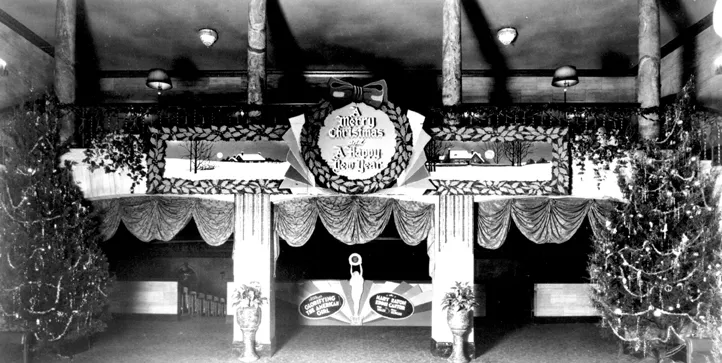
Photo: State Archives of North Carolina, No restrictions, via Wikimedia Commons
Every November, someone in a collector group posts a grainy photo of a department-store Christmas catalog and asks the same question: is that really Astro Boy? The answer is usually more interesting than a simple yes or no. Those fat little wish books from Sears, JCPenney, Montgomery Ward, Aldens, and Spiegel were once the most persuasive sales tools in American retail. For Astro Boy fans, they are also an underrated paper trail — a way to see what stores thought kids would actually ask Santa for, and when.
Why the Wish Book Matters
A vintage Christmas catalog is not just nostalgia bait. It is a dated, item-numbered, price-stamped snapshot of the marketplace. Toy companies bought those pages to move product, not to preserve history, which makes the evidence oddly honest. If Astro Boy shows up beside the train set and the toaster, that tells you something about licensing, distribution, and how far the character had traveled into everyday American shopping.
Here at Astro Boy Central, we tend to chase the obvious grails: tin toys, model kits, animation cels, lunchboxes. Catalogs sit in the background because they are paper, bulky, and easy to overlook. That is exactly why they are useful. They help date the stuff we already own and explain why some Astro Boy items feel common while others barely surface.
What Actually Showed Up
Astro Boy was never Batman. His US merchandise presence was sporadic, and the department-store catalogs reflect that. The 1960s TV tie-in years are the best hunting ground, but even then you should expect gaps. When Astro Boy appears, it is often in peripheral sections: boys’ sleepwear, school supplies, inexpensive rack toys, or an imported novelty tucked near the seasonal impulse buys. A battery-operated figure or a wristwatch might turn up in one regional edition and vanish from the next.
What did not show up matters too. You will not find Astro Boy dominating the main toy spread the way Star Wars or G.I. Joe did in their peak years. By the 1980s, the character was more likely to be a comic-shop or video-store find than a mainstream department-store listing. That unevenness is the story. The wish books show a robot hero who was beloved by fans but never fully absorbed into the American mass-market machine.
How to Identify a Catalog Year
Start with the boring parts. Check the spine, cover, order form, and copyright page for a date. Many catalogs print a year on the cover, but plenty do not. Use item numbers, prices, page numbering, and even the styling of the models’ clothes to narrow things down. A catalog with no visible year is not worthless, but you should not pay a premium for a seller’s guess.
Cross-check against known catalog runs. Regional editions varied, and a page that appears in one store’s book may be missing from another. If a listing says Astro Boy and the photo looks like a generic robot, slow down. Sellers sometimes label any blue robot as Astro Boy to catch search traffic. The catalog itself is evidence; the listing title is not.
Spotting Reproductions and Scans
Original catalogs are generally affordable compared with the toys they advertise, which makes them a friendly entry point for new collectors. That also means reproductions and print-on-demand compilations are floating around. Look for modern barcodes, ISBNs, glossy paper that feels wrong for the period, perfect binding on something that should be stapled, or a title page that says reprint. Halftone dots and yellowed paper are not automatic proof of age, but they are clues.
Loose pages are common and can be useful for framing or research, but they are not the same as a complete catalog. Online scans are wonderful for checking a listing, yet a scanned page is not a collectible. If you are buying a single page, ask whether it was removed from a bound catalog or printed from a digital file. The difference matters.
Dating Toys, Pajamas, and School Supplies
This is where catalogs earn their shelf space. Match the packaging, colorway, item number, and price against the page. A catalog listing can confirm that a toy was sold in a particular year, but it is not a value guide. It tells you context, not rarity. Use it alongside manufacturer marks, copyright stamps, and packaging variations.
The same goes for soft goods. Astro Boy pajamas, school kits, and lunch-adjacent gear are easy to misdate because kids wore them hard and labels disappeared. A catalog page can give you a reference point for graphics and trim. Treat it as corroboration, not a final verdict. Regional editions and store exclusives mean the paper trail is messier than it looks.
Buying Tips for the 2026 Holiday Season
Set a budget before you start hunting. Complete catalogs with strong toy sections are the most useful, but they are also heavy to ship. Ask for photos of the spine, the copyright page, and the Astro Boy listing if there is one. Watch for water damage, clipped pages, musty smells, and sellers who use the character’s name in the title without showing the actual page.
Search terms like ‘Sears Christmas catalog 1964,’ ‘JCPenney wish book 1960s,’ and ‘Montgomery Ward Christmas catalog robot’ will get you further than a generic Astro Boy query. Estate sales, ephemera shows, and local antique malls are good places to flip through books before buying. Save searches on the big marketplaces, but do not chase every listing. The fun is in the hunt, not in winning an auction for a blurry page you cannot verify.
A Paper Trail, Not a Grail
Astro Boy collectors love objects that feel like they fell out of a specific moment. A Christmas catalog does exactly that. It puts the robot in context — next to the train set, the toaster, and the other hopeful purchases of a American holiday season. It is not the flashiest collectible on the shelf, but it is one of the most useful. Store it flat, keep it dry, and scan the pages you need for research. The wish book is a time machine with an item number, and for Astro Boy fans, that is worth a little shelf space.