The Bag-and-Board Astro: How US Reprints Made Tezuka’s Robot a Comic-Shop Regular
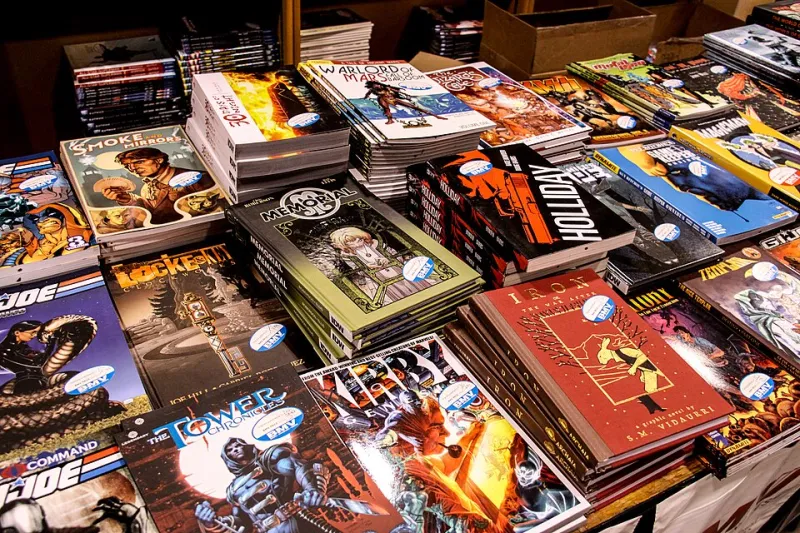
Photo: jareed from London, UK, CC BY 2.0, via Wikimedia Commons
Astro Boy has a way of sneaking up on American fans through different doors. Some of us met him on a fuzzy Saturday-morning broadcast. Others found him in a library manga section or a streaming queue. But there’s another entrance that gets less attention: the comic shop. Not the superhero wall, exactly—more like the shelf where imported art books, prestige reprints, and oddball licensed comics share space with whatever Diamond shipped that week. That’s where a lot of US readers first handled Tezuka’s robot as an object: a book with a spine, a barcode, and maybe a variant cover to argue about.
The comic-shop Astro is a different animal from the cartoon Astro. Television gave us motion, voice, and a theme song. Reprints gave us paper stock, translation choices, cover galleries, and the quiet anxiety of whether to open the shrinkwrap. For collectors, that difference matters. A cartoon is something you remember. A graphic novel is something you bag, board, shelve, and occasionally flip through while telling yourself you’re not going to crease the corner.
First Encounters on the Spinner Rack
Astro Boy’s American print history is not one clean, unbroken line. It’s more like a series of attempts, some fleeting and some durable. Earlier decades saw scattered licensed appearances and reprint experiments that never quite turned into a monthly habit for US readers. Those books are curiosity pieces now—the kind of thing that turns up in a dollar bin or a forgotten shop backroom and makes a collector pause. They’re not always pretty, and they’re not always easy to find, but they mark the first times Astro had to compete for attention on an American comic rack rather than a TV dial.
That early scarcity shaped collector habits. When a character appears in fits and starts, fans learn to grab what they can. They learn to ask questions. Is this a first printing? Is the cover different from the trade paperback? Did this edition keep the original right-to-left reading order, or did it flip the pages? These are not the concerns of a casual viewer. They’re the concerns of someone building a shelf.
Dark Horse and the Omnibus Effect
The modern comic-shop relationship really tightened when Dark Horse brought Tezuka’s manga back into US stores in the early 2000s. These weren’t skinny floppy issues designed to be read once and stuffed in a box. They were proper books—thick, weighty, and clearly meant to sit on a shelf next to other manga and art comics. The omnibus editions that followed made the same point on a bigger scale: Astro Boy was not a novelty reprint. He was a foundational text, and the format said so.
That format shift changed the collector conversation. Instead of chasing single issues, fans started comparing editions. Which translation reads better? Which volume has the better cover design? Is the paper stock worth the upgrade? The omnibus became a kind of gateway drug for people who had only known Astro as a cartoon. You bought one thick book, liked the design, and suddenly you were checking release dates and wondering whether the next volume would match the first on the shelf. That’s collector behavior, even if you never touch a mylar sleeve.
IDW, Movie Tie-Ins, and the Variant Table
Then came the movie-era books and the IDW years, which brought a different energy. A theatrical release tends to pull licensed comics into comic shops with a rush of covers, adaptations, and promotional editions. Some of these books were aimed at younger readers. Some were aimed at nostalgic adults. Some were clearly aimed at the variant-cover crowd. That’s where the comic-shop Astro got a little more complicated—and a little more collectible in the modern sense.
Variant covers are a curious thing. They can be beautiful, they can be shameless, and they can turn a simple purchase into a spreadsheet decision. A retailer-exclusive cover here, a convention edition there, and suddenly you’re not just reading Astro Boy. You’re tracking print runs. You’re asking whether the movie adaptation belongs next to the manga or in its own little section. You’re deciding whether a tie-in comic is “real” Astro Boy or just a licensed cousin. Those arguments are part of the fun, honestly. They’re also a sign that the character had crossed over from imported classic to American comic-shop product.
What Collectors Actually Do With Them
Here’s the thing about comic-shop Astro: the collecting habits around him are not always precious. Plenty of fans read their copies and let the spines soften. Plenty of others keep one reading copy and one “nice” copy, which is a very comic-shop compromise. You see it with the Dark Horse volumes, the IDW editions, and the assorted movie-era books. One shelf is for browsing. One shelf is for the bag-and-board treatment. The same person might own both and feel no contradiction.
The more interesting collector habit is the comparison habit. US reprints invite side-by-side reading because they differ in translation, trim size, cover art, and extras. A fan might pull out two editions of the same story and compare how a line of dialogue lands. That’s not just hoarding. It’s a way of engaging with Tezuka’s work as a text rather than a piece of merchandise. The comic-shop setting encourages that: you’re surrounded by people who care about printings, yes, but also about the stories inside them.
A Different Gateway
The Saturday-morning cartoon gave Astro Boy a mass audience. The comic shop gave him a paper trail. For US collectors in 2026, that trail is still worth following. The reprints are not always glamorous. Some are out of print. Some are easy to find used. Some have covers that look like they were designed by committee. But together they tell a story about how a Japanese classic became an American shelf object—something you can hold, compare, and argue about.
That’s the comic-shop Astro: part gateway, part collectible, part translation debate waiting to happen. He may not have the variant-cover hype cycle of a superhero relaunch, but he has something better—a long, strange paper history that rewards the reader who looks past the spinner rack and asks what’s inside.